VMPL
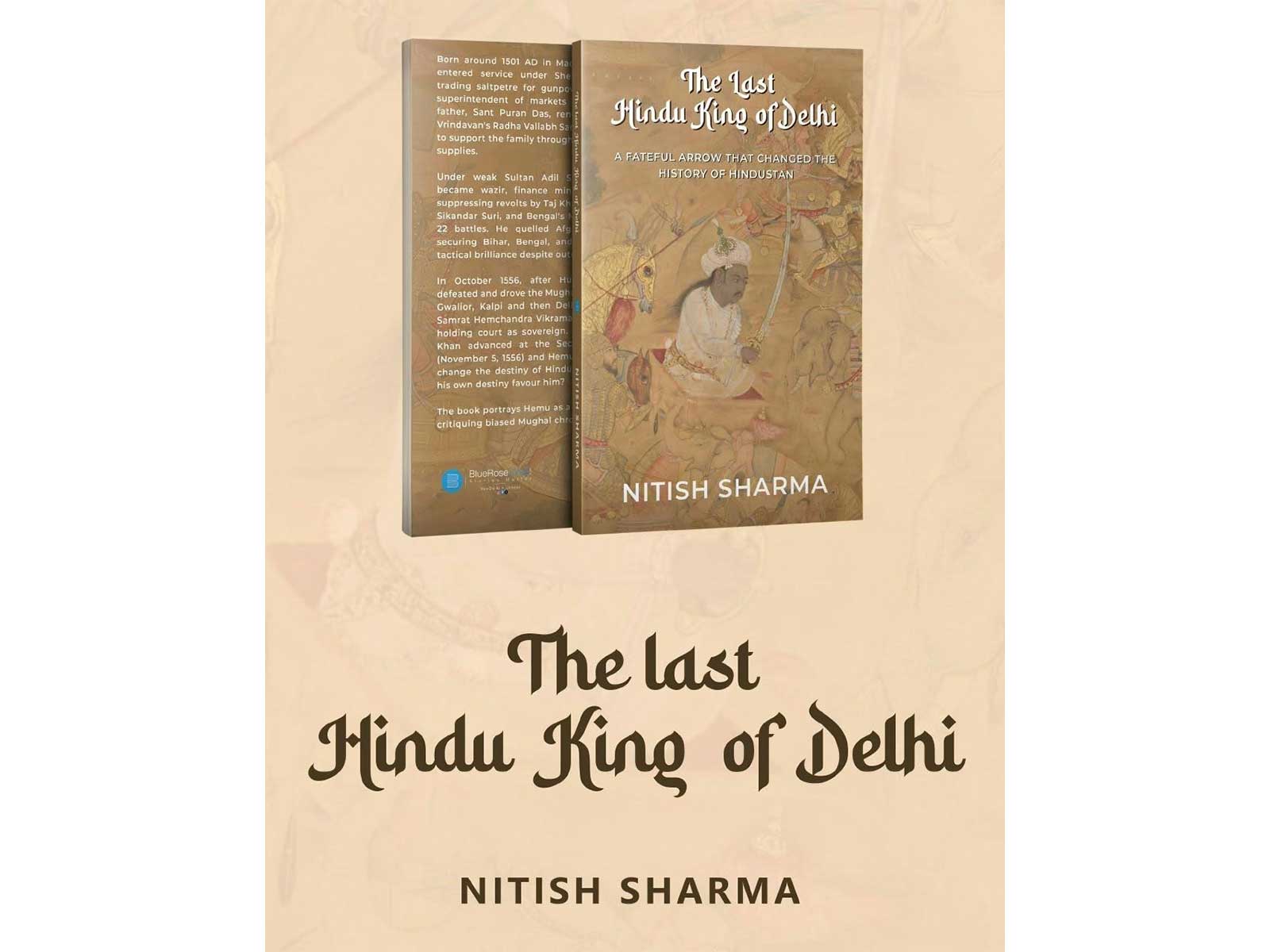
New Delhi [India], October 6: Decades before Akbar consolidated Mughal rule, a single stray arrow on a bloody November afternoon in 1556 altered the destiny of South Asia. In his compelling new historical release, The Last Hindu King of Delhi, author Nitish Sharma challenges centuries of court-sponsored propaganda to restore Samrat Hemchandra Vikramaditya, known simply as Hemu, from a suppressed footnote to his rightful place in the pantheon of India's greatest sovereigns.
Standard history textbooks often present the 16th-century transition of power in India as a seamless relay race from the Delhi Sultanate to the Mughals. Sharma’s work shatters this simplistic narrative, uncovering a high-stakes geopolitical thriller driven by a market weighman who shattered caste barriers, built a gunpowder cartel, and achieved 22 consecutive battlefield victories to reclaim the throne of Delhi.
Before Panipat: The Rise, Triumph, and Erasure of Hemchandra Vikramaditya:
In the history taught across our schools, the rise of the Mughal Empire feels almost pre-ordained, where the Delhi Sultanate falters, Babur enters at Panipat, Humayun stumbles, and young Akbar secures an empire. Yet buried beneath centuries of imperial court amnesia lies a forgotten epoch when the trajectory of the entire subcontinent hung in the balance. At the center of this pivot stands Hemchandra Bhargava, a figure so extraordinary that his true story reads less like a dusty chronicle and more like an epic thriller.
Unlike legendary monarchs born to dynasties such as Maharana Pratap or Chhatrapati Shivaji Maharaj, Hemu possessed no royal lineage. Born in 1501 into a humble Dhusar household in Machari (Alwar), his early years were marked by severe poverty after his father, Puran Das, renounced material life. Hemu began his working life as a common greengrocer and market weighman. Yet, three centuries before modern social reform movements, he smashed rigid sixteenth-century caste barriers through sheer administrative genius, rising from market surveyor to Chief of Intelligence, Wazir (Prime Minister) of Adil Shah Suri of the Sur Dynasty, and eventually Emperor.
Mughal chroniclers like Abul Fazl and Badayuni frequently used derogatory labels like bakkaal (trader) or sabzi farosh (greengrocer) to diminish his meteoric rise. What these court historians deliberately obscured was the nature of his commerce: Hemu was not merely selling grain; he was a master supplier of saltpetre (potassium nitrate), the indispensable chemical engine of military gunpowder. By orchestrating munitions and logistics for the Sur Empire, Hemu gained deep, insider mastery over artillery and supply chains long before he ever commanded an army in the field.
When he did take field command, his tactical record was peerless.
Leading a diverse army composed of Hindu chieftains and elite Afghan soldiers who placed their absolute trust in his leadership, Hemu marched across Northern India on behalf of Adil Shah and defeated all his adversaries. From Kalpi to Sambhal, Agra, and Tughlaqabad in Delhi, he routed foreign Mughal garrisons in consecutive battles without a single defeat. Following his victory over Tardi Beg Khan at Tughlaqabad, Hemu performed an act unprecedented in four centuries: on October 7, 1556, he entered Delhi, underwent a formal coronation at Purana Qila, and assumed the ancient title of Samrat Hemchandra Vikramaditya, restoring native rule to Delhi.
Victory was firmly within his grasp against the Mughals at the Second Battle of Panipat on November 5, 1556. Riding his famous war elephant Hawai, Hemu had shattered Akbar and Bairam Khan’s flanks, pushing the Mughal army to the brink of a permanent retreat from India. Then, in a fraction of a second, history turned on the thinnest margin of chance when a stray arrow pierced Hemu’s eye, penetrating his brain. Seeing their invincible commander fall unconscious, his forces panicked and started fleeing. Hemu was captured and immediately executed, allowing Mughal chroniclers to rewrite history and reduce a master strategist to a mere intruder. "Hemu’s life stands as living proof that destiny is not merely inherited, it can be forged on the battlefield," says author Nitish Sharma. "Without that single stray arrow at Panipat, the Mughal Empire would have ended before it truly began. It is high time we restore Samrat Hemchandra Vikramaditya to his rightful place in history."
(ADVERTORIAL DISCLAIMER: The above press release has been provided by VMPL. ANI will not be responsible in any way for the content of the same)